
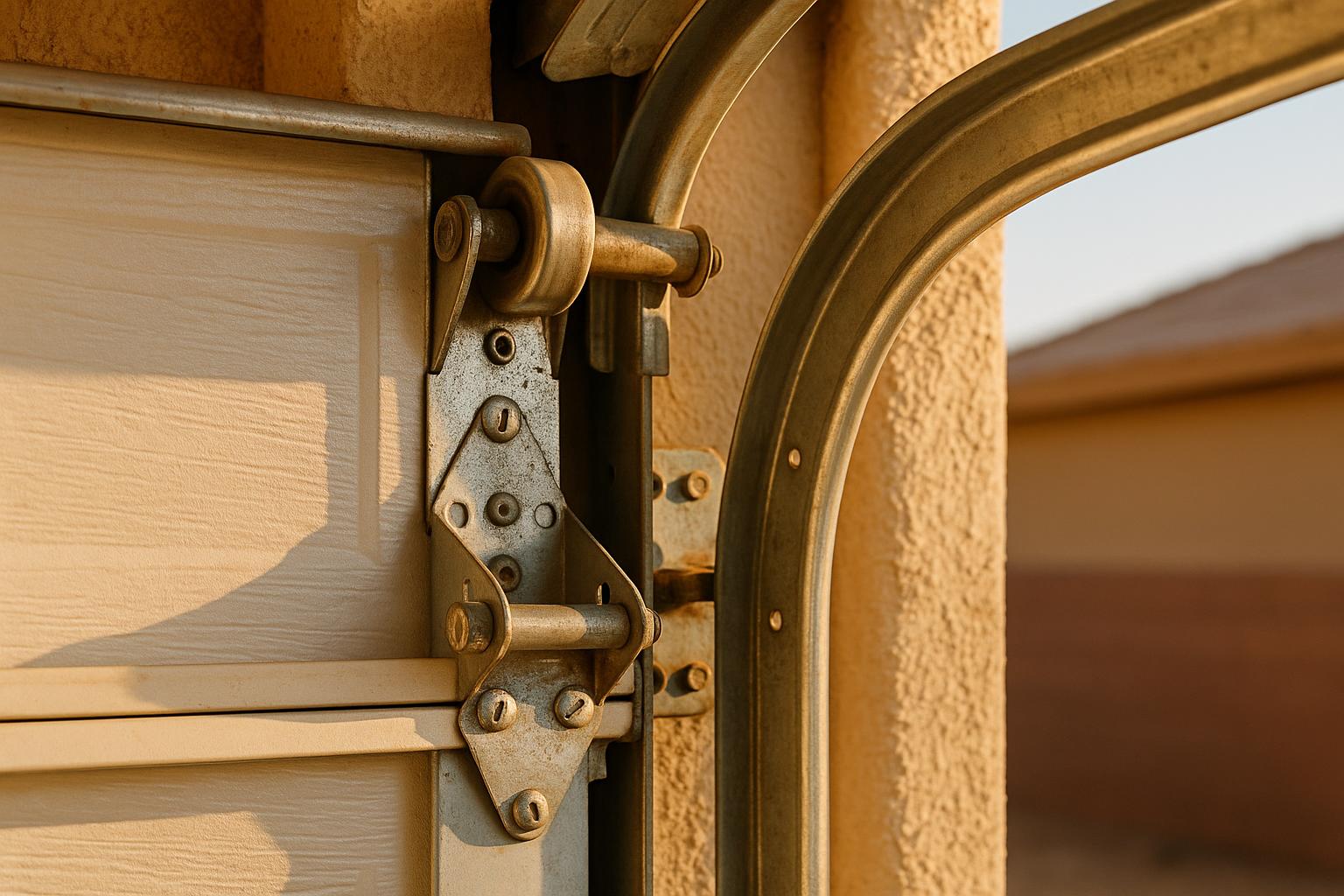
A Noisy Garage Door Is Trying to Tell You Something
You hit the button on your garage door opener, and instead of a smooth, quiet operation, you're greeted with grinding, squealing, rattling, or banging. If your garage door has started making noises that wake up the whole house — or the whole block — you're not alone. It's one of the most common complaints we hear from homeowners across North Las Vegas.
The good news is that most garage door noises have identifiable causes, and many of them are fixable before they turn into expensive repairs. The bad news? Ignoring the noise almost always makes things worse. Let's walk through the most common culprits and what you can do about each one.
Squealing or Screeching Sounds
A high-pitched squeal when your garage door moves is usually a lubrication issue. The metal-on-metal contact between rollers, hinges, tracks, and springs creates friction, and over time that friction leads to noise — especially in a dry desert climate like ours here in North Las Vegas, where humidity is almost nonexistent for most of the year.
What to Do
- Apply a garage door-specific lubricant (not WD-40, which is a solvent, not a lubricant) to the rollers, hinges, springs, and bearing plates.
- Use a silicone-based or lithium-based grease designed for garage door hardware.
- Lubricate your garage door components at least twice a year — more often if you open and close it multiple times a day.
If lubrication doesn't quiet things down, the rollers themselves may be worn out and need replacement.
Grinding or Scraping Noises
A grinding sound often means something is rubbing where it shouldn't be. This is typically caused by one of two things: worn-out rollers or a misaligned track.
Worn rollers: Most standard garage doors come with steel rollers, which wear down over time and start grinding against the track. Upgrading to nylon rollers is one of the best investments you can make — they're significantly quieter and require less maintenance.
Misaligned tracks: If the vertical or horizontal tracks have shifted even slightly, the door can scrape against them as it moves. You might also notice the door hesitating or moving unevenly. Track alignment issues should be handled by a professional because improperly adjusted tracks can cause the door to come off the rails entirely.
Rattling and Vibrating
Rattling is one of the easier problems to diagnose. In most cases, it means something is loose. Over time, the constant vibration of a garage door opening and closing several times a day will loosen nuts, bolts, and screws throughout the system.
What to Check
- Tighten all visible nuts and bolts on the track brackets, hinges, and roller brackets using a socket wrench.
- Check the chain or belt on your opener — a loose chain will slap against the rail and create a rattling noise.
- Inspect the opener mounting bracket where it connects to the ceiling. If the bracket is loose, the entire opener unit will vibrate.
A quick tightening session can eliminate a surprising amount of noise. We recommend checking hardware every six months as part of a basic preventive maintenance routine.
Banging or Popping Sounds
A loud bang or pop when the door starts moving is more concerning. This sound often comes from the torsion springs — the large, tightly wound springs mounted above the door. As springs age, they can develop flat spots or lose tension unevenly, which causes them to pop or bang when the door engages.
In some cases, the banging comes from panels that have become warped or from a door that's out of balance. A balanced garage door should stay in place when you manually lift it to about waist height and let go. If it drops or rises on its own, the springs may need adjustment.
Important: Never attempt to adjust or replace torsion springs yourself. These components are under extreme tension and can cause serious injury. This is always a job for a trained technician.
Humming or Buzzing from the Opener
If the noise is coming from the opener unit itself rather than the door, you may be dealing with a motor issue. A humming or buzzing sound — especially if the door isn't moving — can indicate that the motor is straining to lift the door but can't.
Common Causes
- Stripped gears: The nylon gears inside many chain-drive openers wear out over time. You'll hear the motor running but the door won't move.
- Capacitor failure: The start capacitor gives the motor the initial boost it needs. When it fails, the motor hums but can't engage.
- Door disconnect: Check that the emergency release cord hasn't been pulled, disconnecting the door from the opener carriage.
Opener repairs can range from a simple gear replacement to needing a whole new unit, depending on the age and condition of your current system. If your opener is more than 10-15 years old and making unusual sounds, it may be more cost-effective to replace it with a newer, quieter model — especially the belt-drive units that are popular with homeowners in communities like Aliante and Centennial Hills where homes are close together.
When Noise Means It's Time for Professional Help
Some garage door noises are easy DIY fixes. Lubrication, tightening hardware, and basic visual inspections are all things most homeowners can handle. But there are situations where calling a professional is the smart move:
- The noise started suddenly — a dramatic change in sound usually means something broke or shifted.
- The door moves unevenly — one side higher than the other, jerky motion, or hesitation at certain points.
- You see visible damage — cracked rollers, frayed cables, or gaps in the spring coils.
- The door won't stay open — this points to a spring or balance issue that needs professional attention.
- You've already tried basic fixes — if lubrication and tightening didn't help, the problem is likely deeper in the system.
At North Las Vegas Overhead Door Co, we diagnose noisy garage doors every week. Most of the time, we can identify and fix the issue in a single visit. Whether it's worn rollers, a failing opener, or springs that need attention, we've seen it all across North Las Vegas, Henderson, Summerlin, and the surrounding areas.
Prevention Is Cheaper Than Repair
The best way to avoid a noisy garage door is to stay ahead of the problem. Regular preventive maintenance — including lubrication, hardware inspection, balance testing, and safety sensor checks — keeps your door running quietly and extends the life of every component.
We recommend scheduling a professional maintenance visit at least once a year. It's a small investment that can save you from unexpected breakdowns and costly emergency repairs, especially during the extreme summer months when garage door systems in North Las Vegas are under the most stress.
If your garage door is making noises that don't sound right, don't wait for the problem to get worse. Give us a call and we'll get it sorted out — quickly, affordably, and the right way.