
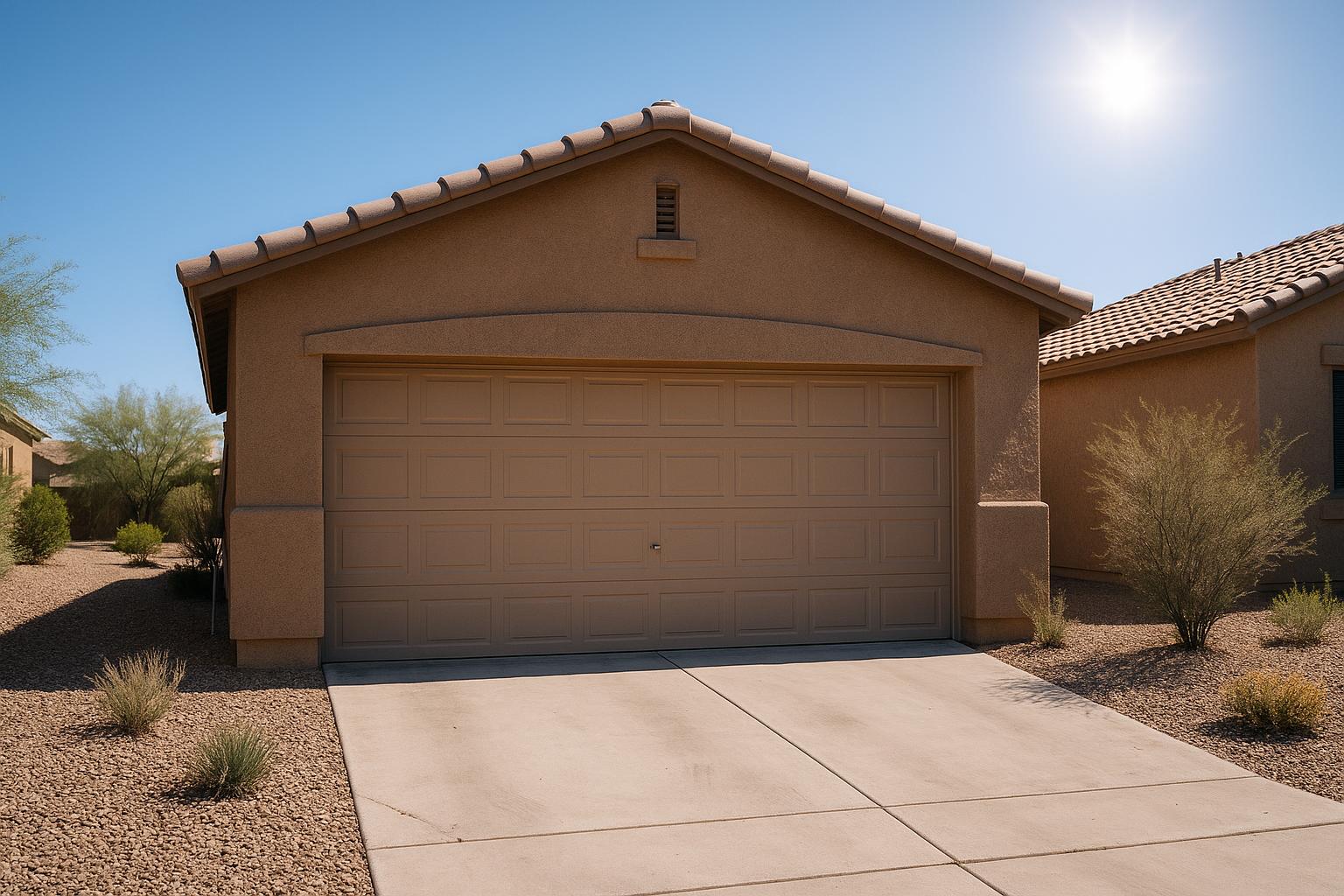
Your Garage Door Takes a Beating Every Summer
When temperatures in North Las Vegas climb past 110°F, most of us are thinking about keeping the AC running and staying hydrated. But there's one part of your home that silently absorbs all that punishment day after day — your garage door. It's the largest moving component of your house, and it faces direct sun exposure for hours at a time.
The extreme desert heat affects nearly every part of your garage door system, from the metal springs and tracks to the rubber weatherstripping and the opener motor itself. If you've never thought about how summer impacts your garage door, this guide will walk you through what to watch for and how to keep everything running smoothly when the heat is at its worst.
How Extreme Heat Affects Garage Door Components
Metal Expansion in Springs and Tracks
Metal expands when it gets hot — that's basic physics. In a climate like ours, where garage-facing surfaces can reach 150°F or more in direct sunlight, that expansion is significant. Your garage door tracks, hinges, and springs all experience thermal expansion during the hottest parts of the day and then contract again overnight.
Over time, this constant cycle of expanding and contracting can loosen hardware, shift track alignment, and accelerate metal fatigue in springs. If your garage door starts making new noises during the summer or feels like it's binding in certain spots, heat-related expansion could be the culprit.
Weatherstripping and Seals Dry Out
The rubber and vinyl seals along the bottom and sides of your garage door are designed to keep out dust, pests, and outside air. But intense UV exposure and dry desert heat cause these materials to crack, shrink, and harden much faster than they would in a milder climate. Once your weatherstripping fails, you'll notice more dust blowing into the garage, higher energy bills if the space is climate-controlled, and possibly even small critters finding their way inside.
Opener Motors Work Harder
Your garage door opener has a motor, and motors generate heat. When the ambient temperature inside your garage is already well over 100°F, that motor has to work significantly harder to do the same job. This can lead to the opener overheating and shutting down temporarily, or in worse cases, burning out prematurely. If your opener has ever refused to work on a particularly hot afternoon and then started functioning again later in the evening, thermal overload protection was likely kicking in.
Panel Warping and Paint Damage
Steel and aluminum garage door panels can warp slightly under extreme heat, especially on south- and west-facing garages that get hours of direct afternoon sun. Wooden garage doors are even more vulnerable — they can crack, split, and warp as moisture is pulled out of the wood. Paint and finish coatings also fade and deteriorate faster under relentless UV exposure, leaving your door looking worn out before its time.
How to Prepare Your Garage Door for Summer
The good news is that a little preventive care goes a long way. Here's a practical checklist to help your garage door survive another North Las Vegas summer:
- Lubricate all moving parts. Apply a silicone-based lubricant to springs, hinges, rollers, and tracks. Heat dries out lubrication faster, so doing this at the start of summer — and again mid-season — helps prevent grinding, squeaking, and premature wear.
- Inspect and replace weatherstripping. Check the bottom seal and the seals along the door frame. If you see cracks, gaps, or sections that have hardened and lost flexibility, replace them. New weatherstripping is inexpensive and makes a noticeable difference in keeping heat and dust out of your garage.
- Tighten all hardware. Go over the brackets, bolts, and screws on your tracks, hinges, and opener mounting. Thermal cycling loosens hardware gradually, and a quick tightening session can prevent bigger alignment problems later.
- Test the balance of your door. Disconnect the opener and manually lift the door halfway. If it stays in place, the balance is good. If it slides up or crashes down, the spring tension needs adjustment. An unbalanced door forces the opener to work harder, which is the last thing you want when the motor is already fighting the heat.
- Check your opener's ventilation. Make sure the area around your garage door opener isn't blocked by storage boxes or other items. Adequate airflow helps the motor dissipate heat. If your garage gets extremely hot, a small fan directed at the opener can help prevent thermal shutdowns.
- Consider a light-colored door or reflective coating. If your garage door is dark-colored and faces the sun, it absorbs significantly more heat. When it's time for a replacement, choosing a lighter color or an insulated door can reduce heat absorption and help regulate temperatures inside the garage.
When to Schedule Professional Maintenance
Some of these tasks are easy enough for a handy homeowner, but others require professional attention. Spring tension adjustments, track realignment, and opener motor diagnostics should be handled by a trained technician. Working with garage door springs in particular can be dangerous without the right tools and experience.
We recommend scheduling a professional maintenance visit at least once a year, ideally in late spring before the worst of the summer heat arrives. During a maintenance appointment, a technician will inspect every component of your system, make adjustments, lubricate parts, and flag anything that's showing signs of wear before it turns into an expensive breakdown.
Insulated Doors Make a Real Difference Here
If you're considering a new garage door installation, insulation is worth serious consideration for homes in our area. An insulated garage door can reduce the temperature inside your garage by 20°F or more compared to a non-insulated door. That means less strain on your opener, a more comfortable space if you use your garage as a workshop or gym, and lower energy costs if your garage shares a wall with air-conditioned living space.
Modern insulated doors use polyurethane or polystyrene cores sandwiched between steel panels. They're durable, energy-efficient, and available in a wide range of styles that look great on any home in Aliante, Centennial Hills, Summerlin, or anywhere else in the Las Vegas valley.
Don't Wait for a Breakdown
The worst time to deal with a garage door problem is when it's 115°F outside and you're stuck in your driveway. A little preventive attention now saves you from emergency repairs later. If it's been a while since your garage door had a professional tune-up, or if you've noticed any of the issues mentioned above, give North Las Vegas Overhead Door Co a call. We'll make sure your door is ready to handle whatever the desert throws at it this summer.