
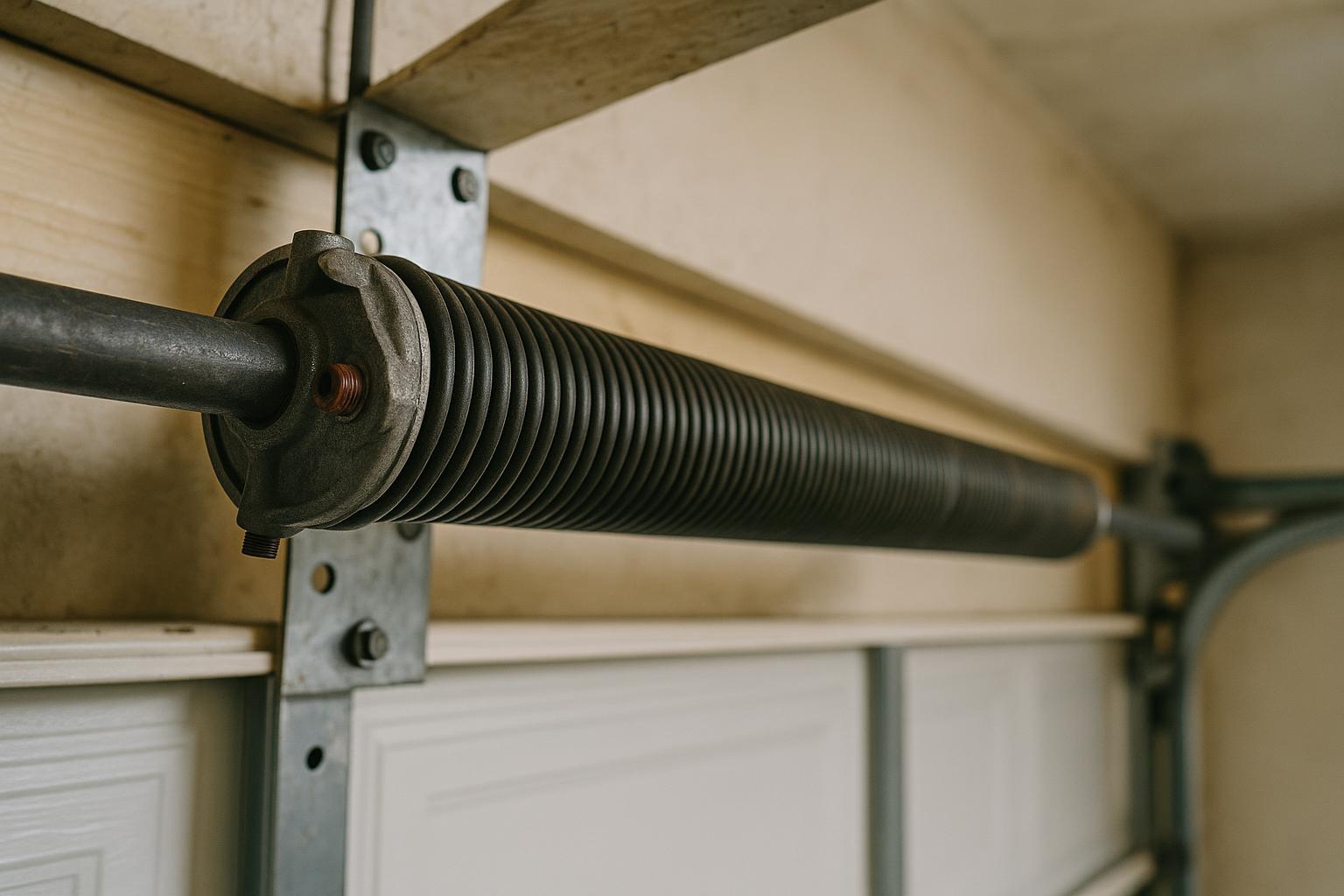
Your Garage Door Springs Are Doing More Work Than You Think
Every time you open or close your garage door, the springs are doing the heavy lifting — literally. A standard two-car garage door can weigh between 150 and 250 pounds, and the springs are responsible for counterbalancing all of that weight. Without properly functioning springs, your garage door opener would burn out in a matter of days, and manually lifting the door would feel nearly impossible.
Despite how critical they are, most homeowners in North Las Vegas don't think about their garage door springs until something goes wrong. And when a spring breaks, it's not subtle — you'll hear a loud bang, and your door will either refuse to open or come crashing down unevenly. Understanding the lifespan of your springs and recognizing early warning signs can save you from an inconvenient (and potentially dangerous) situation.
How Long Do Garage Door Springs Last?
The lifespan of a garage door spring is measured in cycles. One cycle equals one full open and one full close of the door. Most standard torsion springs are rated for approximately 10,000 cycles, while high-cycle springs can last 25,000 to 50,000 cycles or more.
So how does that translate to years? It depends on how often you use your garage door:
- 2 cycles per day (once out, once in): A standard spring lasts roughly 13-14 years.
- 4 cycles per day (common for families): A standard spring lasts roughly 7 years.
- 6-8 cycles per day (busy households or home businesses): A standard spring may only last 3-5 years.
If your garage door is the primary entry point for your home — which is extremely common here in North Las Vegas — you're likely putting more cycles on your springs than you realize. Many families use the garage door more than the front door, racking up four to six cycles every single day.
How the North Las Vegas Climate Affects Your Springs
Living in the desert comes with unique challenges for your garage door hardware. The extreme heat we experience during summer — with temperatures regularly exceeding 110°F — causes the metal in your springs to expand and contract repeatedly. Over time, this thermal cycling weakens the steel and accelerates metal fatigue.
Additionally, the dry desert air in North Las Vegas means there's very little natural lubrication on metal components. Without regular maintenance, springs can develop surface rust and micro-cracks that shorten their lifespan. While our climate spares us from the moisture-related corrosion that coastal cities deal with, the heat and dryness create their own set of problems that homeowners should be aware of.
Warning Signs Your Springs Are Wearing Out
Don't wait for a spring to snap before taking action. Here are the telltale signs that your garage door springs are nearing the end of their life:
The Door Feels Heavier Than Usual
Try this simple test: disconnect the opener by pulling the emergency release handle, then manually lift the door halfway. A properly balanced door should stay in place when you let go. If it feels heavy, slides down, or is difficult to lift, your springs are losing tension and need attention.
The Door Opens Unevenly
If one side of the door rises faster than the other, it could mean one spring is weaker than its counterpart. On a two-spring system, the springs rarely wear at exactly the same rate, and an imbalance puts extra strain on your opener and tracks.
Visible Wear on the Springs
Take a moment to visually inspect your springs. Look for:
- Gaps or separations in the coils
- Rust or corrosion on the surface
- Springs that appear stretched or elongated compared to when they were new
- Any visible cracks in the metal
Loud Squeaking or Grinding Noises
While some noise is normal, excessive squeaking or grinding when the door operates can indicate that the springs are dry, corroded, or losing their structural integrity. Lubrication may help temporarily, but persistent noise is a sign of deeper wear.
Your Opener Is Struggling
If your garage door opener seems to be working harder than usual — running louder, moving slower, or occasionally failing to fully open the door — worn springs could be the culprit. When springs lose tension, the opener has to compensate for the extra weight, which shortens the life of the motor too.
Should You Replace One Spring or Both?
This is one of the most common questions we hear from homeowners across North Las Vegas, Las Vegas, Henderson, and Summerlin. If only one spring has broken, is it worth replacing both?
Our recommendation is almost always yes — replace both springs at the same time. Here's why:
- If one spring has reached the end of its lifespan, the other one is likely not far behind.
- Replacing both ensures even balance and tension across the door.
- You save on labor costs by having both done in a single service visit rather than paying for two separate trips.
- A mismatched set (one new, one old) puts uneven stress on your door and opener.
Why Spring Replacement Is Not a DIY Job
We understand the DIY spirit — and there are plenty of garage door tasks that a handy homeowner can tackle. Spring replacement is not one of them. Garage door springs are under enormous tension, and a spring that snaps or is improperly installed can cause serious injury or even death.
Torsion springs, which are mounted on a shaft above the door, require specialized tools called winding bars and a precise understanding of how to safely release and apply tension. Extension springs, while simpler in design, can become dangerous projectiles if safety cables aren't properly installed.
Professional technicians have the training, tools, and experience to replace springs safely and efficiently. At North Las Vegas Overhead Door Co, a typical spring replacement takes about 45 minutes to an hour, and we test the door balance thoroughly before we leave.
Extending the Life of Your Springs
While springs will eventually wear out no matter what, regular preventive maintenance can help you get the most out of them:
- Lubricate your springs every three to four months with a silicone-based or lithium-based garage door lubricant. This reduces friction and helps prevent rust.
- Schedule annual maintenance with a professional to check spring tension, door balance, and overall hardware condition.
- Consider high-cycle springs when it's time for replacement. They cost more upfront but can last two to four times longer than standard springs — a smart investment for busy households.
- Minimize unnecessary cycles by keeping a house key handy instead of always using the garage door as your primary entrance when possible.
When It's Time, We're Here to Help
If your garage door springs are showing signs of wear, or if it's been seven years or more since they were last replaced, it's worth having a professional take a look. Catching a worn spring before it breaks means you avoid the inconvenience of a door that won't open — which in the North Las Vegas heat is more than just an annoyance if your car is trapped inside a sweltering garage.
North Las Vegas Overhead Door Co serves homeowners throughout North Las Vegas, Aliante, Centennial Hills, and the greater Las Vegas valley. We carry a full inventory of standard and high-cycle springs on our trucks, so most replacements are completed in a single visit. Give us a call to schedule an inspection or spring replacement — we'll make sure your garage door keeps running smoothly for years to come.